
Noodle Texture Analysis & Machine
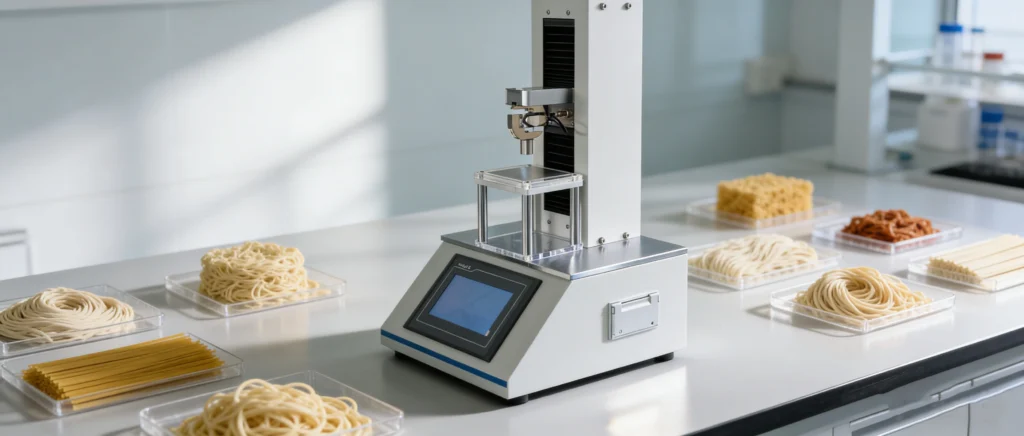
Noodle Texture Analyzer
Comprehensive Testing for Noodles and Pasta
Noodle Texture Analyzer
About Cell Instruments
Cell Instruments specializes in high-precision food texture analysis instruments, serving industries including food, packaging, medical, and pharmaceuticals. Our noodle texture analyzer helps manufacturers and quality control laboratories assess the physical properties of noodle and pasta products, ensuring consistency and optimal texture in production.
Reliable Bekk Smoothness Testing for Quality Assurance
Why Noodle Texture Analysis Is Important
Understanding noodle texture is crucial for consumer satisfaction. Texture influences perceived quality, cooking performance, and mouthfeel. Accurate noodle texture analysis allows manufacturers to:
- Optimize firmness, elasticity, and chewiness.
- Maintain batch-to-batch consistency.
- Improve product formulation and processing methods.
- Reduce complaints and returns due to inconsistent noodle texture.
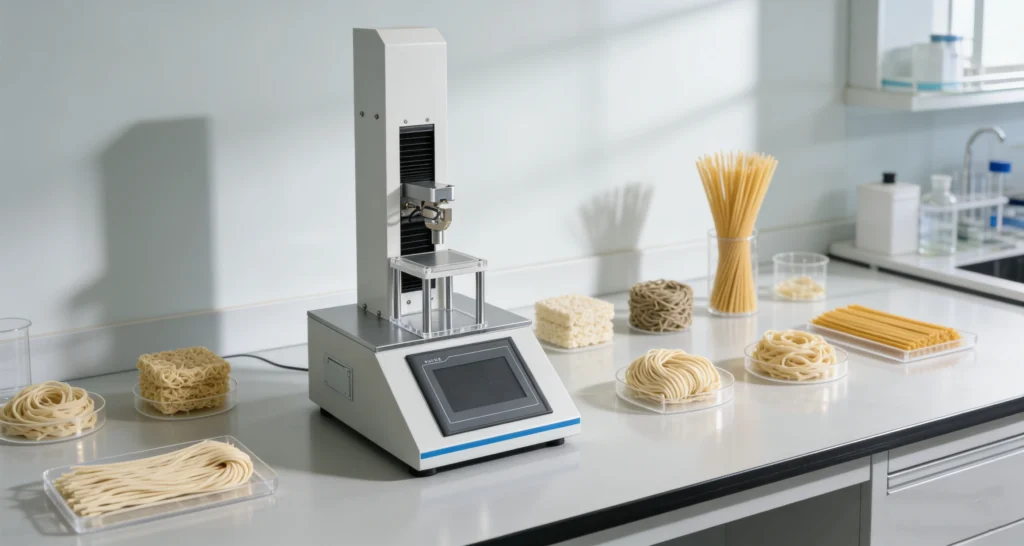
Key Advantages of Cell Instruments Noodle Texture Analyzer
Modern Noodle Texture Analyzer from Cell Instruments combine automation, precision and user‑friendliness:
- High Precision: Detects minor differences in tensile strength, chewiness, and gel strength.
- Comprehensive Testing Capability: Supports TPA, tensile, cutting, elasticity, and firmness analysis.
- Automation & Repeatability: Reduces manual errors and improves reproducibility of results.
- Customizable Accessories: Cylinder probes, clamps, and blade fixtures can adapt to noodle type, size, and preparation method.
- Data Integration: Software captures, analyzes, and reports results efficiently for QC and R&D.
Advanced Accessories and Testing Options
Cell Instruments offers a variety of accessories to extend noodle texture testing capabilities:
01
Noodle Tensile Rig
Accurate measurement of noodle elasticity and breaking strength.
02
Cylinder Probes and Cutting Blades
Compatible with multiple sample types for TPA, firmness, and cutting force analysis.
03
Software Integration
Real-time data recording and automatic reporting for quality control.
03
Customizable Fixtures
Adaptable to different noodle diameters, lengths, and shapes.
Brief Description of the Texture Test Method
- Place noodle or pasta sample on the test platform.
- Choose the appropriate fixture or probe based on the test (TPA, tensile, cutting, or cylinder probe).
- Apply controlled force or compression.
- Record measurements for firmness, elasticity, cohesiveness, chewiness, or breaking force.
- Analyze data using software for batch comparison, quality control, or R&D evaluation.
Texture Analysis Methods for Noodles
Texture Profile Analysis (TPA)
TPA simulates the human chewing process. Using double compression, this method quantifies key attributes such as hardness, springiness, cohesiveness, and chewiness. It is particularly useful for soft noodles and cooked pasta products.
Noodle Tensile Test
The Noodle Tensile Rig measures the force required to stretch a noodle until breaking. This provides a direct assessment of noodle strength and elasticity, critical for spaghetti and other long-form pasta products.
Firmness Measurement
Firmness testing evaluates the resistance of noodles to compression. It is applicable for both dried and cooked products and helps standardize cooking quality across batches.
Cutting Force Analysis
This method uses specialized blades or probes to determine the resistance of noodles to cutting, critical for instant noodles and thicker pasta varieties.
Cylinder Probe Texture Analysis
Cylinder probes provide detailed mechanical data on noodle surface and internal structure, complementing TPA and tensile tests for a comprehensive texture profile.
Noodle Texture Analyzer

| Parameter | TEX-01 / TEX-01Pro | TEX-02 |
| Test Range | 50 kg | 20 kg |
| Speed | 1–500 mm/min | 1–500 mm/min |
| Stroke | 250 mm | 110 mm |
| Key Methods | Noodle Tensile Test, Firmness Measurement, Cutting Force Analysis, Cylinder Probe Analysis, TPA Texture (Pro only) | Noodle Tensile Test, Firmness Measurement, Cutting Force Analysis, Cylinder Probe Analysis |
| Sample Compatibility | Spaghetti, Instant Noodles, Fresh Pasta and so on | |
| Maximum Sample Length | 500 mm | 200 mm |
| Test Fixtures | Noodle Tensile Rig, Cylinder Probe, Cutting Blade | |
| Software Features | Automatic Reporting, Batch Comparison | |
| Power | AC 110–220V | |
| Dimensions (L×W×H mm) | 410 × 360 × 820 | 450 × 300 × 360 |
Applicable Fields and Typical Applications
Noodle and Pasta Production
Ensures consistent firmness, elasticity, and chewiness in noodles and pasta through tensile, cutting, and TPA texture measurements.
Instant Noodles Quality Control
Monitors texture of pre-fried or air-dried noodles, maintaining bite and mouthfeel after cooking.
R&D and Product Development
Supports formulation optimization and new product development with TPA, gel strength, and tensile tests.
Sensory Correlation
Correlates instrumental texture data with consumer perception of chewiness and firmness for reliable product quality.
Why Choose Cell Instruments?
- Proven Expertise: Decades of experience in food texture analysis and materials testing.
- Custom Solutions: Instruments and accessories tailored to noodle type, size, and production method.
- Global Support: Pre-sale consultation, operator training, and responsive after-sales service.
- Reliable Delivery: Export-ready systems with multilingual documentation and international compliance.
- Trusted Partner: Using Cell Instruments, manufacturers gain not just instruments, but a reliable quality assurance partner.
Key Advantages of Cell Instruments Noodle Texture Analyzer
- High Precision: Detects minor differences in tensile strength, chewiness, and gel strength.
- Comprehensive Testing Capability: Supports TPA, tensile, cutting, elasticity, and firmness analysis.
- Automation & Repeatability: Reduces manual errors and improves reproducibility of results.
- Customizable Accessories: Cylinder probes, clamps, and blade fixtures can adapt to noodle type, size, and preparation method.
- Data Integration: Software captures, analyzes, and reports results efficiently for QC and R&D.
Frequently Asked Questions about Noodle Texture Analyzer
What noodle products can be tested with a noodle texture analyzer?
Spaghetti, instant noodles, fresh pasta, and specialty noodles of varying thickness and length.
What testing methods are available for noodle texture?
TPA, noodle tensile test, cutting force analysis, firmness measurement, and cylinder probe testing.
Can noodle texture analyzers be customized?
Yes, Cell Instruments provides tailored fixtures and probes for specific noodle shapes and testing requirements.
How does noodle texture analysis improve product quality?
It ensures consistency in chewiness, elasticity, and firmness, helping manufacturers optimize recipes and meet consumer expectations.