
Análise de textura de macarrão e máquina
Ensaio de tração de noodles
Garantir uma qualidade consistente através da análise da textura do macarrão
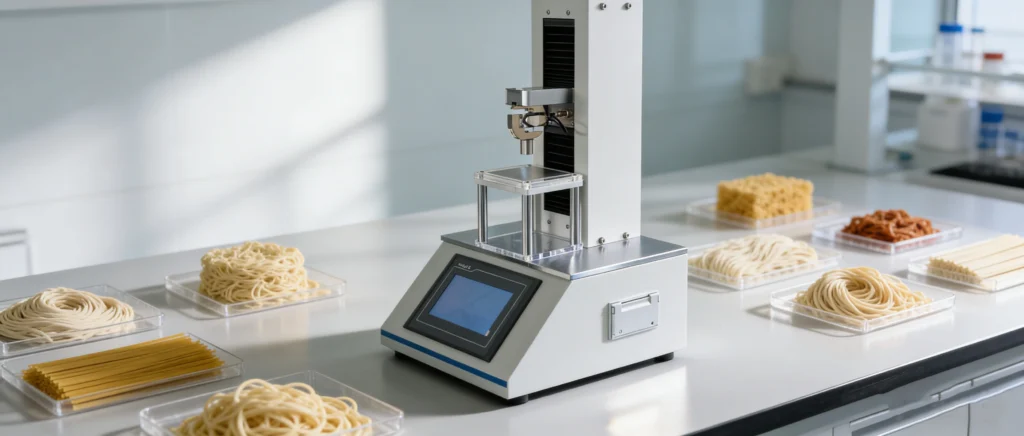
Analisador de textura de macarrão
Sobre nós
A Cell Instruments é especializada em produtos de alta precisão analisadores de textura de massa concebido para a indústria alimentar. Oferecemos soluções para ensaios de tração em massas, esparguete e produtos de massa semelhantes, ajudando os fabricantes de alimentos e os laboratórios de controlo de qualidade a medir a textura, a elasticidade e a resistência à quebra. Os nossos instrumentos garantem que os produtos cumprem os padrões desejados em termos de qualidade, sensação na boca e satisfação do consumidor.
Teste de suavidade Bekk fiável para garantia de qualidade
Como medir a textura com analisadores de textura para macarrão e esparguete
Compreender a textura da massa é crucial para a satisfação do consumidor. A textura influencia a qualidade percebida, o desempenho na cozedura e a sensação na boca. Precisão análise da textura da massa permite aos fabricantes:
- Preparação da amostra: Cozinhe o macarrão ou o esparguete até atingir a consistência desejada, garantindo que todas as amostras fiquem com a mesma textura.
- Fixação: Prenda os fios de massa com as pinças do analisador, sem causar deformações antes do teste.
- Aplicação da força: Aplique gradualmente uma força de tração ao longo do comprimento do fio até que este se parta.
- Registo de dados: Medir parâmetros como a resistência máxima à tração, o alongamento na ruptura e a elasticidade, que refletem as propriedades mecânicas do macarrão.
Estes testes ajudam os fabricantes quantificar a textura, validar os parâmetros de processamento e garantir a consistência entre lotes.
Parâmetros-chave nos ensaios de tração de macarrão
A analisador de textura de massa avalia vários parâmetros que definem a qualidade do produto:
- Força de ruptura: A tensão máxima que o macarrão consegue suportar antes de se partir.
- Alongamento: A distância que um fio de massa se estica antes de se partir, o que indica a sua elasticidade.
- Firmeza: Resistência à deformação durante a aplicação de tensão.
- Análise do Perfil Textural (TPA): Alguns analisadores avançados permitem a realização de testes com vários ciclos para simular o comportamento mastigatório e a sensação geral na boca.
A medição precisa destes parâmetros garante que o macarrão cozido cumpra os padrões esperados para textura e satisfação do consumidor.
Fatores que afetam os resultados dos ensaios de tração
Vários fatores influenciam a precisão e a relevância de ensaios de tração a macarrão:
01
Teor de humidade
Um maior teor de humidade pode aumentar a elasticidade, mas reduzir a resistência à ruptura.
02
Tempo de cozedura
O macarrão cozido em excesso apresenta menor resistência à tração; o macarrão mal cozido pode ficar quebradiço.
03
Espessura e forma do macarrão
Os diferentes diâmetros ou tipos de fios afetam o comportamento de alongamento.
03
Temperatura
A realização de ensaios a temperaturas constantes garante a comparabilidade entre lotes.
A compreensão destas variáveis permite aos fabricantes interpretar corretamente os resultados e otimizar a produção.
Instrumento recomendado: Cell Instruments TEX-01
O Cell Instruments TEX-01 foi concebido especificamente para ensaios de tração a massas. As suas características incluem:
- Pincéis ajustáveis para macarrões de vários tamanhos.
- Medição de força e deslocamento em alta resolução.
- Velocidades de teste programáveis para protocolos consistentes.
- Compatibilidade com Análise do perfil de textura para uma avaliação aprofundada.
A utilização do TEX-01 garante a reprodutibilidade, a precisão e a fiabilidade dos dados para a otimização do produto.

Domínios aplicáveis e aplicações típicas
Produção de macarrão e massas
Garante firmeza, elasticidade e mastigabilidade consistentes em noodles e massas através de medições de textura de tração, corte e TPA.
Controlo de qualidade do macarrão instantâneo
Monitoriza a textura da massa pré-frita ou seca ao ar, mantendo o sabor e a sensação na boca após a cozedura.
I&D e desenvolvimento de produtos
Apoia a otimização de formulações e o desenvolvimento de novos produtos com TPA, resistência do gel e testes de tração.
Correlação sensorial
Correlaciona os dados de textura instrumental com a perceção do consumidor sobre a mastigabilidade e a firmeza para uma qualidade fiável do produto.
Por que escolher a Cell Instruments?
A Cell Instruments fornece soluções líderes do setor para testes de textura de massas:
- Alta precisão: Medições precisas e repetíveis da resistência à tração e da elasticidade.
- Versatilidade: Adequado para massas secas, frescas ou de especialidade.
- Personalização: Pegas personalizadas e protocolos de teste para tipos específicos de macarrão.
- Apoio especializado: Orientações técnicas para a seleção de métodos, calibração e interpretação de dados.
A parceria com a Cell Instruments ajuda os fabricantes a manter uma qualidade superior dos noodles, ao mesmo tempo que melhora a eficiência da produção.
Importância dos ensaios de tração para a qualidade dos noodles
Ensaios de tração fornecem informações essenciais para além da inspeção visual. As principais vantagens incluem:
- Garantir consistência entre lotes.
- Otimização das fórmulas de massa para obter a elasticidade e a firmeza desejadas.
- Apoiando desenvolvimento de produtos e avaliação de novas receitas.
- Reduzir as reclamações dos consumidores relativas à quebra do macarrão ou à textura indesejável.
Para os fabricantes de massa seca e fresca, os ensaios de tração constituem um pilar fundamental da garantia de qualidade.
Perguntas frequentes sobre o Noodle Texture Analyzer
Qual é o objetivo de um ensaio de tração em macarrão?
Um ensaio de tração a macarrão mede as propriedades mecânicas dos produtos de macarrão e esparguete, incluindo resistência à ruptura, elasticidade e alongamento, que são essenciais para avaliar a qualidade da textura e o desempenho na cozedura.
Como devem ser preparadas as amostras de massa para análise?
As amostras devem ser cozidas ou hidratadas de forma consistente, de acordo com as especificações do produto. Assegure a uniformidade no diâmetro, comprimento e temperatura dos fios de massa para obter resultados reproduzíveis.
O ensaio de tração a massas pode ajudar no desenvolvimento de produtos?
Sim. Ao analisar as propriedades de tração, os fabricantes podem otimizar as fórmulas, ajustar o teor de glúten ou de amido e aperfeiçoar os parâmetros de cozedura para alcançar o resultado desejado textura e sensação na boca tanto em massa seca como fresca.