
Analisi della consistenza degli spaghetti e macchina
Test di trazione delle tagliatelle
Garantire una qualità costante grazie all'analisi della consistenza dei noodles
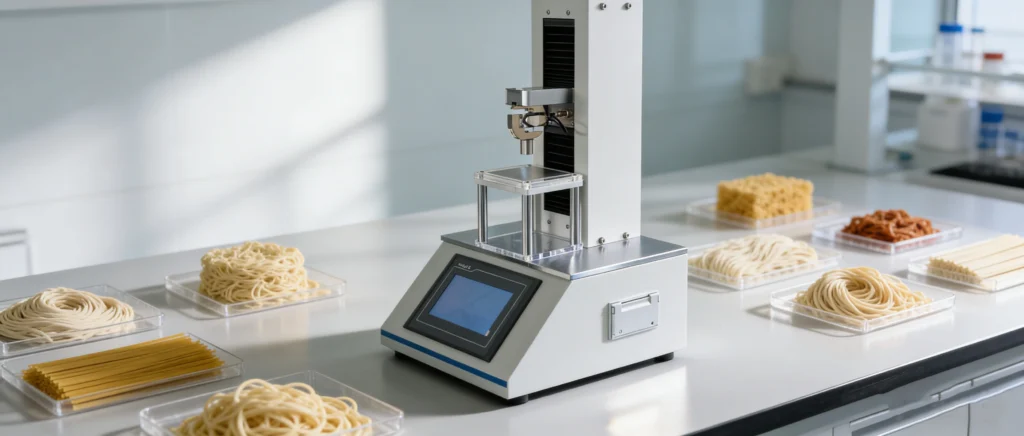
Analizzatore della consistenza degli spaghetti
Chi siamo
Cell Instruments è specializzata in prodotti di alta precisione. analizzatori della consistenza dei noodles progettato per il settore alimentare. Offriamo soluzioni per prove di trazione su noodles, spaghetti e prodotti simili a base di pasta, aiutando i produttori alimentari e i laboratori di controllo qualità a misurare la consistenza, l'elasticità e la resistenza alla rottura. I nostri strumenti garantiscono che i prodotti soddisfino gli standard desiderati in termini di qualità, sensazione in bocca e soddisfazione del consumatore.
Test di scorrevolezza Bekk affidabili per la garanzia di qualità
Come misurare la consistenza con gli analizzatori di consistenza per pasta e spaghetti
La comprensione della consistenza degli spaghetti è fondamentale per la soddisfazione dei consumatori. La consistenza influenza la qualità percepita, le prestazioni di cottura e la sensazione in bocca. Accurato analisi della consistenza degli spaghetti consente ai produttori di:
- Preparazione del campione: Cuocere la pasta o gli spaghetti fino a raggiungere la consistenza desiderata, assicurandosi che tutti i campioni abbiano la stessa consistenza.
- Fissaggio: Fissare i fili di pasta utilizzando le pinze dell'analizzatore senza provocare deformazioni prima del test.
- Uso della forza: Applicare gradualmente una forza di trazione lungo tutta la lunghezza del filo fino a quando non si verifica la rottura.
- Registrazione dei dati: Misurare parametri quali la resistenza massima alla trazione, l'allungamento a rottura e l'elasticità, che riflettono le proprietà meccaniche della pasta.
Questi test aiutano i produttori quantificare la trama, verificare i parametri di lavorazione e garantire l'uniformità tra i lotti.
Parametri chiave nelle prove di trazione sui noodles
A analizzatore della consistenza degli spaghetti valuta diversi parametri che determinano la qualità del prodotto:
- Forza di rottura: La sollecitazione massima che la pasta può sopportare prima di spezzarsi.
- Allungamento: La lunghezza che un noodle raggiunge prima di spezzarsi, a indicare la sua elasticità.
- Rigidità: Resistenza alla deformazione durante la trazione.
- Analisi del profilo della struttura (TPA): Alcuni analizzatori avanzati consentono di effettuare test su più cicli per simulare il comportamento masticatorio e la sensazione complessiva in bocca.
Una misurazione accurata di questi parametri garantisce che la pasta cotta soddisfi gli standard previsti per consistenza e soddisfazione dei consumatori.
Fattori che influenzano i risultati delle prove di trazione
Diversi fattori influenzano l'accuratezza e la pertinenza di prove di trazione su spaghetti:
01
Contenuto di umidità
Un maggiore contenuto di umidità può aumentare l'elasticità, ma ridurre la resistenza alla rottura.
02
Tempo di cottura
La pasta troppo cotta presenta una resistenza alla trazione inferiore; quella poco cotta può risultare friabile.
03
Spessore e forma dei noodles
Diametri o tipi di trecce diversi influenzano il comportamento all'allungamento.
03
Temperatura
L'esecuzione dei test a temperature costanti garantisce la comparabilità tra i lotti.
Comprendere queste variabili consente ai produttori di interpretare correttamente i risultati e ottimizzare la produzione.
Strumento consigliato: Cell Instruments TEX-01
Il Cell Instruments TEX-01 è progettato specificamente per le prove di trazione su pasta. Le sue caratteristiche includono:
- Impugnature regolabili per pasta di diverse dimensioni.
- Misurazione ad alta risoluzione della forza e dello spostamento.
- Velocità di prova programmabili per garantire protocolli uniformi.
- Compatibilità con Analisi del profilo della struttura per una valutazione approfondita.
L'utilizzo del TEX-01 garantisce la riproducibilità, la precisione e l'affidabilità dei dati ai fini dell'ottimizzazione del prodotto.

Campi di applicazione e applicazioni tipiche
Produzione di pasta e noodle
Garantisce la consistenza, l'elasticità e la masticabilità di tagliatelle e pasta attraverso misure di trazione, taglio e TPA.
Controllo di qualità degli spaghetti istantanei
Controlla la consistenza dei noodles prefritti o essiccati all'aria, mantenendo il morso e la sensazione in bocca dopo la cottura.
R&S e sviluppo del prodotto
Supporta l'ottimizzazione delle formulazioni e lo sviluppo di nuovi prodotti con test TPA, di resistenza al gel e di trazione.
Correlazione sensoriale
Correla i dati sulla consistenza strumentale con la percezione della masticabilità e della compattezza da parte del consumatore per ottenere una qualità affidabile del prodotto.
Perché scegliere Cell Instruments?
Cell Instruments offre soluzioni all'avanguardia nel settore per l'analisi della consistenza della pasta:
- Alta precisione: Misurazioni accurate e ripetibili della resistenza alla trazione e dell'elasticità.
- Versatilità: Adatto a pasta secca, fresca o di tipo speciale.
- Personalizzazione: Impugnature su misura e protocolli di prova specifici per ogni tipo di pasta.
- Assistenza da parte di esperti: Linee guida tecniche per la scelta dei metodi, la taratura e l'interpretazione dei dati.
La collaborazione con Cell Instruments aiuta i produttori a mantenere una qualità eccellente dei noodles, migliorando al contempo l'efficienza produttiva.
L'importanza delle prove di trazione per la qualità della pasta
Prove di trazione forniscono informazioni fondamentali che vanno oltre la semplice ispezione visiva. I principali vantaggi includono:
- Garantire uniformità tra i lotti.
- Ottimizzazione delle formulazioni dei noodles per ottenere l'elasticità e la consistenza desiderate.
- A sostegno di sviluppo dei prodotti e la valutazione di nuove ricette.
- Ridurre i reclami dei consumatori relativi alla rottura della pasta o alla consistenza non gradita.
Per i produttori di pasta secca e fresca, le prove di trazione rappresentano un elemento fondamentale del controllo qualità.
Domande frequenti sull'analizzatore di consistenza per tagliatelle
Qual è lo scopo di una prova di trazione sui noodles?
Una prova di trazione sui noodles misura le proprietà meccaniche dei noodles e degli spaghetti, tra cui forza di rottura, elasticità e allungamento, che sono fondamentali per valutare la qualità della consistenza e le prestazioni in cottura.
Come vanno preparati i campioni di pasta per l'analisi?
I campioni devono essere cotti o reidratati in modo uniforme, secondo le specifiche del prodotto. Assicurarsi che il diametro, la lunghezza e la temperatura dei filamenti di pasta siano uniformi per ottenere risultati riproducibili.
La prova di trazione sui noodles può essere utile nello sviluppo dei prodotti?
Sì. Analizzando le proprietà di resistenza alla trazione, i produttori possono ottimizzare le formulazioni, regolare il contenuto di glutine o di amido e perfezionare i parametri di cottura per ottenere il risultato desiderato consistenza e sensazione in bocca sia nella pasta secca che in quella fresca.