
Analyse av nudeltekstur og maskin
Strekkprøving av nudler
Sikre jevn kvalitet gjennom analyse av nudlers tekstur
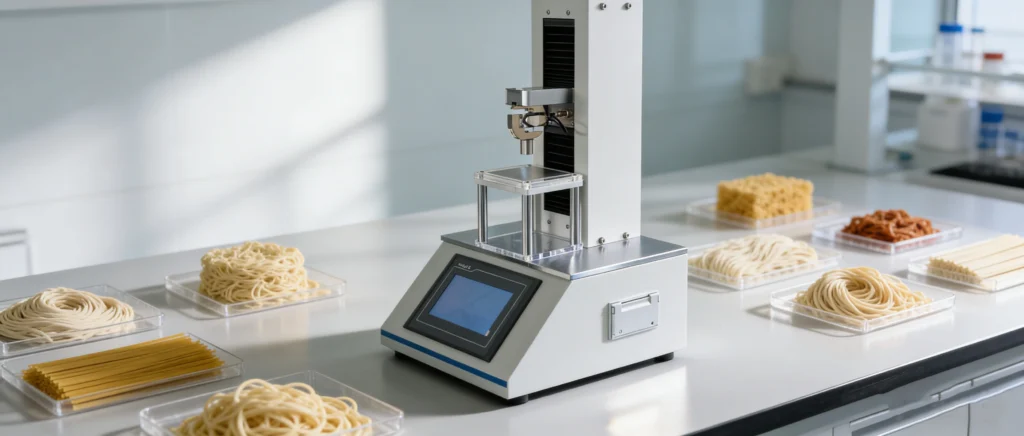
Noodle Texture Analyzer
Om oss
Cell Instruments spesialiserer seg på høy presisjon analysatorer for nudlers tekstur utviklet for næringsmiddelindustrien. Vi tilbyr løsninger for trekkprøver på nudler, spaghetti og lignende pastaprodukter, og hjelper matprodusenter og kvalitetskontrollaboratorier med å måle tekstur, elastisitet og bruddstyrke. Våre instrumenter sikrer at produktene oppfyller de ønskede standardene for kvalitet, munnfølelse og forbrukertilfredshet.
Pålitelig Bekk-glatthetstesting for kvalitetssikring
Hvordan måle tekstur med teksturanalysatorer for nudler og spaghetti
Det er avgjørende for forbrukernes tilfredshet å forstå konsistensen på nudler. Konsistensen påvirker opplevd kvalitet, kokeegenskaper og munnfølelse. Nøyaktig analyse av nudeltekstur gjør det mulig for produsenter å:
- Forberedelse av prøven: Kok nudler eller spaghetti til ønsket konsistens, og sørg for at alle prøvene blir like.
- Festing: Fest nudelstrengene i analysatorens klemmer uten å forårsake deformasjon før testen.
- Bruk av makt: Påfør gradvis strekkraft langs trådens lengde til den ryker.
- Dataregistrering: Mål parametere som maksimal strekkfasthet, bruddforlengelse og elastisitet, som gjenspeiler nudlenes mekaniske egenskaper.
Disse testene hjelper produsentene måle tekstur, kontrollere prosessparametrene og sikre konsistens mellom ulike batcher.
Viktige parametere ved strekkprøving av nudler
A nudelteksturanalysator vurderer flere parametere som avgjør produktkvaliteten:
- Bruddstyrke: Den maksimale belastningen nudelen tåler før den knekker.
- Forlengelse: Hvor langt en nudel kan strekkes før den ryker, noe som viser elastisiteten.
- Fasthet: Motstand mot deformasjon ved strekkbelastning.
- Teksturprofilanalyse (TPA): Noen avanserte analysatorer tillater testing over flere sykluser for å simulere tyggeatferd og den generelle munnfølelsen.
Nøyaktig måling av disse parametrene sikrer at kokte nudler oppfyller forventede standarder for tekstur og kundetilfredshet.
Faktorer som påvirker resultatene av strekkprøver
Flere faktorer påvirker nøyaktigheten og relevansen av strekkprøver på nudler:
01
Fuktighetsinnhold
Høyere fuktighet kan øke elastisiteten, men redusere bruddstyrken.
02
Steketid
Overkokte nudler har lavere strekkfasthet; underkokte nudler kan være sprø.
03
Nudlenes tykkelse og form
Ulike diametre eller trådtyper påvirker strekkegenskapene.
03
Temperatur
Testing ved konstante temperaturer sikrer sammenlignbarhet mellom ulike partier.
Ved å forstå disse variablene kan produsentene tolke resultatene riktig og optimalisere produksjonen.
Anbefalt instrument: Cell Instruments TEX-01
Den Cell Instruments TEX-01 er spesielt utviklet for strekkprøving av nudler. Funksjonene inkluderer:
- Justerbare grep for ulike størrelser på nudler.
- Måling av kraft og forskyvning med høy oppløsning.
- Programmerbare testhastigheter for ensartede protokoller.
- Kompatibilitet med Analyse av teksturprofil for en grundig vurdering.
Bruk av TEX-01 sikrer reproduserbarhet, nøyaktighet og pålitelige data for produktoptimalisering.

Anvendelsesområder og typiske bruksområder
Produksjon av nudler og pasta
Sikrer jevn fasthet, elastisitet og tyggbarhet i nudler og pasta ved hjelp av strekk-, skjære- og TPA-teksturmålinger.
Kvalitetskontroll av Instant Noodles
Overvåker teksturen til ferdigstekte eller lufttørkede nudler, og opprettholder bitt og munnfølelse etter tilberedning.
FoU og produktutvikling
Støtter formuleringsoptimalisering og utvikling av nye produkter med TPA-, gelstyrke- og strekktester.
Sensorisk korrelasjon
Korrelerer instrumentelle teksturdata med forbrukernes oppfatning av tyggbarhet og fasthet for pålitelig produktkvalitet.
Hvorfor velge Cell Instruments?
Cell Instruments tilbyr bransjeledende løsninger for testing av teksturen på nudler:
- Høy presisjon: Nøyaktige og repeterbare målinger av strekkfasthet og elastisitet.
- Allsidighet: Egnet for tørre, ferske eller spesialtilberedte nudler.
- Tilpasning: Skreddersydde grep og testprotokoller for ulike typer nudler.
- Ekspertstøtte: Teknisk veiledning for valg av metode, kalibrering og tolkning av data.
Et samarbeid med Cell Instruments hjelper produsenter med å opprettholde en førsteklasses nudelkvalitet samtidig som produksjonseffektiviteten forbedres.
Betydningen av strekkprøving for nudelkvaliteten
Strekkprøver gir viktig informasjon utover det man kan se ved en visuell inspeksjon. De viktigste fordelene er:
- Sikre konsistens mellom batcher.
- Optimalisering av nudeloppskrifter for å oppnå ønsket elastisitet og fasthet.
- Støtte produktutvikling og vurdering av nye oppskrifter.
- Redusere forbrukerklager om at nudlene går i stykker eller har uønsket konsistens.
For produsenter av tørre og ferske nudler er strekkprøving en hjørnestein i kvalitetssikringen.
Ofte stilte spørsmål om Noodle Texture Analyzer
Hva er formålet med en strekkprøve på nudler?
En strekkprøve av pasta måler de mekaniske egenskapene til pasta- og spaghettiprodukter, blant annet brytekraft, elastisitet og forlengelse, som er avgjørende for å vurdere teksturkvalitet og kokekvalitet.
Hvordan skal nudelprøver klargjøres for analyse?
Prøvene skal tilberedes eller bløtlegges i henhold til produktspesifikasjonene. Sørg for at nudlene har jevn diameter, lengde og temperatur for å oppnå reproducerbare resultater.
Kan strekkprøven på nudler være til hjelp i produktutviklingen?
Ja. Ved å analysere strekkegenskapene kan produsentene optimalisere oppskriftene, justere gluten- eller stivelsesinnholdet og finjustere tilberedningsparametrene for å oppnå det ønskede tekstur og munnfølelse både i tørre og ferske nudler.