
Analisis Tekstur & Mesin Mie
Uji Tarik Mie
Menjamin Kualitas yang Konsisten Melalui Analisis Tekstur Mie
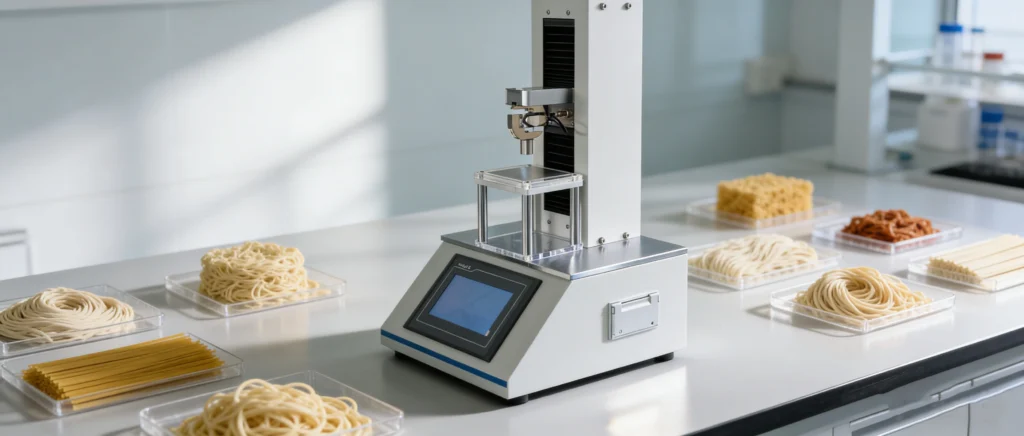
Penganalisis Tekstur Mie
Tentang Kami
Cell Instruments berspesialisasi dalam presisi tinggi alat pengukur tekstur mie dirancang khusus untuk industri makanan. Kami menyediakan solusi untuk uji tarik pada mie, spageti, dan produk pasta sejenisnya, membantu produsen makanan dan laboratorium pengendalian mutu mengukur tekstur, elastisitas, dan kekuatan patah. Alat-alat kami memastikan produk memenuhi standar yang diharapkan dalam hal kualitas, sensasi di mulut, dan kepuasan konsumen.
Pengujian Kehalusan Bekk yang Andal untuk Jaminan Kualitas
Cara Mengukur Tekstur Menggunakan Alat Pengukur Tekstur Mie dan Spageti
Memahami tekstur mie sangat penting untuk kepuasan konsumen. Tekstur memengaruhi kualitas yang dirasakan, kinerja memasak, dan rasa di mulut. Akurat analisis tekstur mie memungkinkan produsen untuk melakukannya:
- Persiapan Sampel: Rebus mie atau spageti hingga mencapai tingkat kematangan yang diinginkan, pastikan teksturnya seragam di seluruh sampel.
- Penjepitan: Kencangkan untaian mie menggunakan penjepit alat analisis tanpa menyebabkan deformasi sebelum pengujian.
- Penerapan Kekuatan: Secara bertahap berikan gaya tarik sepanjang untaian tersebut hingga terjadi patah.
- Pencatatan Data: Ukur parameter-parameter seperti kekuatan tarik maksimum, perpanjangan saat patah, dan elastisitas, yang mencerminkan sifat-sifat mekanis mie tersebut.
Uji-uji ini membantu produsen mengukur tekstur, memverifikasi parameter pemrosesan, dan menjaga konsistensi antar-batch.
Parameter Utama dalam Uji Tarik Mie
A penganalisis tekstur mie mengevaluasi berbagai parameter yang menentukan kualitas produk:
- Gaya Patah: Tegangan maksimum yang dapat ditahan oleh mie sebelum putus.
- Perpanjangan: Jarak yang dapat ditempuh mie sebelum putus, yang menunjukkan tingkat elastisitasnya.
- Kekencangan: Ketahanan terhadap deformasi saat dikenai gaya tarik.
- Analisis Profil Tekstur (TPA): Beberapa alat analisis canggih memungkinkan pengujian multi-siklus untuk mensimulasikan perilaku mengunyah dan sensasi di mulut secara keseluruhan.
Pengukuran yang akurat terhadap parameter-parameter ini memastikan bahwa mie yang sudah dimasak memenuhi standar yang diharapkan untuk tekstur dan kepuasan konsumen.
Faktor-Faktor yang Mempengaruhi Hasil Uji Tarik
Beberapa faktor memengaruhi keakuratan dan relevansi uji tarik mie:
01
Kandungan Air
Kelembapan yang lebih tinggi dapat meningkatkan elastisitas, tetapi mengurangi kekuatan patah.
02
Waktu Memasak
Mi yang terlalu matang memiliki kekuatan tarik yang lebih rendah; mi yang kurang matang bisa menjadi rapuh.
03
Ketebalan dan Bentuk Mie
Diameter atau jenis untaian yang berbeda memengaruhi perilaku peregangan.
03
Suhu
Pengujian pada suhu yang konsisten memastikan kesesuaian antar batch.
Dengan memahami variabel-variabel ini, produsen dapat menafsirkan hasil dengan benar dan mengoptimalkan proses produksi.
Alat yang Direkomendasikan: Cell Instruments TEX-01
The Cell Instruments TEX-01 dirancang khusus untuk pengujian tarik mie. Fitur-fiturnya meliputi:
- Pegangan yang dapat disesuaikan untuk berbagai ukuran mie.
- Pengukuran gaya dan perpindahan beresolusi tinggi.
- Kecepatan pengujian yang dapat diatur untuk protokol yang konsisten.
- Kompatibilitas dengan Analisis Profil Tekstur untuk evaluasi mendalam.
Penggunaan TEX-01 menjamin reproduktifitas, akurasi, dan keandalan data untuk optimalisasi produk.

Bidang yang Berlaku dan Aplikasi Umum
Produksi Mie dan Pasta
Memastikan kekencangan, elastisitas, dan kekenyalan yang konsisten pada mie dan pasta melalui pengukuran tekstur tarik, potong, dan TPA.
Kontrol Kualitas Mie Instan
Memantau tekstur mi yang sudah digoreng atau dikeringkan dengan udara, mempertahankan gigitan dan rasa di mulut setelah dimasak.
Litbang dan Pengembangan Produk
Mendukung optimasi formulasi dan pengembangan produk baru dengan TPA, kekuatan gel, dan uji tarik.
Korelasi Sensori
Mengkorelasikan data tekstur instrumental dengan persepsi konsumen mengenai kekenyalan dan ketegasan untuk kualitas produk yang dapat diandalkan.
Mengapa Memilih Cell Instruments
Cell Instruments menyediakan solusi terdepan di industri untuk pengujian tekstur mie:
- Presisi Tinggi: Pengukuran kekuatan tarik dan elastisitas yang akurat dan dapat diulang.
- Keserbagunaan: Cocok untuk produk mi kering, segar, atau mi spesial.
- Penyesuaian: Pegangan yang disesuaikan dan protokol pengujian untuk jenis mie yang unik.
- Dukungan Ahli: Panduan teknis mengenai pemilihan metode, kalibrasi, dan interpretasi data.
Bekerja sama dengan Cell Instruments membantu produsen mempertahankan kualitas mi yang unggul sekaligus meningkatkan efisiensi produksi.
Pentingnya Uji Tarik bagi Kualitas Mie
Uji tarik memberikan wawasan penting yang tidak dapat diperoleh hanya melalui pemeriksaan visual. Manfaat utamanya meliputi:
- Memastikan konsistensi antar-batch.
- Mengoptimalkan formulasi mie agar memiliki elastisitas dan kekenyalan yang diinginkan.
- Mendukung pengembangan produk dan evaluasi resep baru.
- Mengurangi keluhan konsumen terkait mie yang patah atau tekstur yang tidak sesuai harapan.
Bagi produsen mi kering dan mi segar, uji tarik merupakan salah satu pilar utama dalam jaminan kualitas.
Pertanyaan yang Sering Diajukan tentang Penganalisis Tekstur Mie
Apa tujuan dari uji tarik mie?
Uji tarik mie bertujuan untuk mengukur sifat-sifat mekanis produk mie dan spageti, termasuk gaya patah, elastisitas, dan perpanjangan, yang sangat penting untuk mengevaluasi kualitas tekstur dan hasil masakan.
Bagaimana cara menyiapkan sampel mie untuk pengujian?
Sampel harus dimasak atau direndam secara konsisten sesuai dengan spesifikasi produk. Pastikan keseragaman diameter, panjang, dan suhu mie agar diperoleh hasil yang dapat direproduksi.
Apakah uji tarik mie dapat membantu dalam pengembangan produk?
Ya. Dengan menganalisis sifat tarik, produsen dapat mengoptimalkan formula, menyesuaikan kandungan gluten atau pati, serta menyempurnakan parameter pemasakan untuk mencapai hasil yang diinginkan tekstur dan sensasi di mulut baik pada mie kering maupun mie segar.