
Nuudlite tekstuuri analüüs ja masin
Nuudlite tõmbekatse
Ühtlase kvaliteedi tagamine nuudlite tekstuuri analüüsi abil
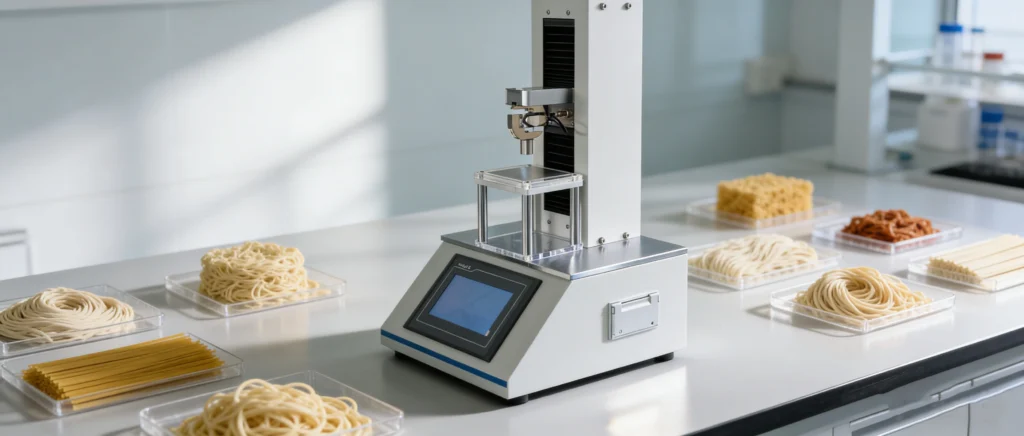
Nuudlite tekstuuri analüsaator
Meist
Cell Instruments on spetsialiseerunud suure täpsusega nuudlite tekstuuri analüsaatorid mõeldud toiduainetööstusele. Pakume lahendusi tõmbekatse nuudlite, spagettide ja muude pastatoodete puhul, aidates toiduainetootjatel ja kvaliteedikontrollilaboritel mõõta tekstuuri, elastsust ja murdumistugevust. Meie seadmed tagavad, et tooted vastavad soovitud kvaliteedi-, suutunde- ja tarbijate rahulolu standarditele.
Usaldusväärne Bekk Smoothness Testing kvaliteedi tagamiseks
Kuidas mõõta tekstuuri nuudli- ja spagettitekstuuri analüsaatoritega
Nuudlite tekstuuri mõistmine on tarbijate rahulolu jaoks ülioluline. Tekstuur mõjutab tajutavat kvaliteeti, küpsetamise tulemuslikkust ja suulaadi. Täpne nuudlite tekstuuri analüüs võimaldab tootjatel:
- Proovi ettevalmistamine: Keetke nuudlid või spagetid soovitud pehmuseni, tagades proovide ühtluse.
- Kinnitamine: Kinnitage nuudlipaelad analüsaatori haardete abil nii, et need ei deformeeruks enne katset.
- Jõu kasutamine: Rakenda kiudu piki selle pikkust järk-järgult tõmbejõudu, kuni see katki läheb.
- Andmete salvestamine: Mõõta selliseid parameetreid nagu maksimaalne tõmbetugevus, venivus murdumisel ja elastsus, mis peegeldavad nuudlite mehaanilisi omadusi.
Need testid aitavad tootjatel tekstuuri kvantifitseerimine, kontrollida töötlemisparameetreid ja tagada partiidevaheline ühtlus.
Nuudlite tõmbekatsetuse põhiparameetrid
A nuudlite tekstuuri analüsaator hinnatakse mitmeid toote kvaliteeti määravaid parameetreid:
- Murdumisjõud: Suurim koormus, mida nuudel suudab taluda enne murdumist.
- Venivus: Vahemaa, mille ulatuses nuudel venib enne katkemist, mis näitab selle elastsust.
- Kõvadus: Deformatsioonikindlus tõmbekoormuse all.
- Tekstuuriprofiili analüüs (TPA): Mõned täiustatud analüsaatorid võimaldavad mitme tsükli pikkust katsetamist, et simuleerida närimiskäitumist ja üldist suus tunnetatavat tekstuuri.
Nende näitajate täpne mõõtmine tagab, et keedetud nuudlid vastavad oodatavatele standarditele tekstuur ja tarbijate rahulolu.
Tõmbekatse tulemusi mõjutavad tegurid
Mitmed tegurid mõjutavad nuudlite tõmbekatse:
01
Niiskusesisaldus
Kõrgem niiskusesisaldus võib suurendada elastsust, kuid vähendada murdumistugevust.
02
Küpsetusaeg
Liiga kaua keedetud nuudlid on vähem tõmbetugevad; liiga vähe keedetud nuudlid võivad olla rabedad.
03
Nuudlite paksus ja kuju
Erinevad läbimõõdud või kiutüübid mõjutavad venivust.
03
Temperatuur
Testimine ühtlasel temperatuuril tagab partiidevahelise võrreldavuse.
Nende muutujate mõistmine võimaldab tootjatel tulemusi õigesti tõlgendada ja tootmist optimeerida.
Soovitatav seade: Cell Instruments TEX-01
The Cell Instruments TEX-01 on spetsiaalselt mõeldud nuudlite tõmbekatsetamiseks. Selle omadused on järgmised:
- Reguleeritavad haardikud erinevate nuudlite suuruste jaoks.
- Jõu ja nihke mõõtmine kõrge eraldusvõimega.
- Programmeeritavad katsetamiskiirused tagavad protokollide ühtluse.
- Ühilduvus Tekstuuriprofiili analüüs põhjalikuks hindamiseks.
TEX-01 kasutamine tagab toote optimeerimiseks tulemuste korratavuse, täpsuse ja usaldusväärsed andmed.

Kohaldatavad valdkonnad ja tüüpilised rakendused
Nuudlite ja makaronide tootmine
Tagab nuudlite ja makaronide püsiva kõvaduse, elastsuse ja närvilisuse järjepidevuse tõmbe-, lõike- ja TPA tekstuurimõõtmiste abil.
Instant Nuudlite kvaliteedikontroll
Jälgib eelküpsetatud või õhukuivatatud nuudlite tekstuuri, säilitades pärast keetmist hammustuse ja suuõõne.
Teadus- ja arendustegevus ning tootearendus
Toetab koostise optimeerimist ja uute toodete arendamist TPA, geel-tugevuse ja tõmbekatsete abil.
Sensoorne korrelatsioon
Korreleerib instrumentaalsed tekstuuriandmed tarbijate ettekujutuse närimiskvaliteedi ja kõvaduse kohta, et tagada toote usaldusväärne kvaliteet.
Miks valida Cell Instruments?
Cell Instruments pakub tööstusharu juhtivaid lahendusi nuudlite tekstuuri testimiseks:
- Kõrge täpsus: Tõmbetugevuse ja elastsuse täpsed ja korratavad mõõtmised.
- Mitmekülgsus: Sobib kuivade, värskete või eritoodete nuudlite valmistamiseks.
- Kohandamine: Iga nuudlitüübi jaoks kohandatud haardemeetodid ja katsemenetlused.
- Ekspertide tugi: Tehnilised juhised meetodi valiku, kalibreerimise ja andmete tõlgendamise kohta.
Koostöö Cell Instruments-ga aitab tootjatel säilitada nuudlite kõrge kvaliteedi ja parandada samal ajal tootmise efektiivsust.
Tõmbekatsete tähtsus nuudlite kvaliteedi hindamisel
Tõmbekatsed pakub olulist lisateavet, mida silmaga vaadates ei ole võimalik saada. Peamised eelised on järgmised:
- Tagamine partiidevaheline ühtlus.
- Nuudlite koostise optimeerimine soovitud elastsuse ja tihkuse saavutamiseks.
- Toetamine tootearendus ja uute retseptide hindamine.
- Vähendada tarbijate kaebusi nuudlite purunemise või ebasoovitava tekstuuri kohta.
Kuivade ja värskete nuudlite tootjate jaoks on tõmbekatsed kvaliteeditagamise nurgakiviks.
Korduma kippuvad küsimused nuudlite tekstuuri analüsaatori kohta
Mis on nuudlite tõmbekatse eesmärk?
Nuudlite tõmbekatsega mõõdetakse nuudlite ja spagettide mehaanilisi omadusi, sealhulgas murdumisjõud, elastsus ja venivus, mis on tekstuuri kvaliteedi ja küpsemisomaduste hindamiseks hädavajalikud.
Kuidas tuleks nuudliproove analüüsiks ette valmistada?
Proove tuleb valmistada või leotada järjepidevalt vastavalt toote spetsifikatsioonidele. Tagage nuudlite läbimõõdu, pikkuse ja temperatuuri ühtlus, et saavutada korratavad tulemused.
Kas nuudlite tõmbekatsetamine võib aidata tootearenduses?
Jah. Tõmbeomaduste analüüsimise abil saavad tootjad optimeerida retsepte, kohandada gluteeni- või tärklisesisaldust ning täiustada küpsetusparameetreid, et saavutada soovitud tekstuur ja suutunne nii kuivades kui ka värsketes nuudlites.